History of the Thai Society of Critical Care Medicine
Critical care medicine in Thailand began to develop systematically during the 1960s and 1970s when many university hospitals and major regional hospitals established intensive care units (ICUs) for the management of critically ill patients. During this early period, ICU beds accounted for only about 1–2% of total hospital beds, and most units functioned as multidisciplinary open ICUs. The primary care team typically consisted of attending physicians and specialized intensive care nurses.
In the 1980s, specialized models of critical care began to evolve. At Siriraj Medical Center, Faculty of Medicine Siriraj Hospital, Mahidol University—the first medical school in Thailand—a hybrid Surgical Intensive Care Unit (SICU) was established and supervised by anesthesiologists. In this model, patients continued to receive surgical treatment from their primary surgeons while the ICU attending physicians provided care for critical illnesses and intensive monitoring.
In 1988, a group of physicians from several medical institutions recognized the need for collaboration to improve critical care practice, education, and services in Thailand. They therefore formed the Critical Care Medicine Club, which served as a platform for professional collaboration and knowledge exchange in the care of critically ill patients.
The activities of the club quickly gained strong interest and support from healthcare professionals working in critical care. Subsequently, the founding physicians assigned Colonel Dr. Suwattana Phoksawat (rank at that time) to formally register the organization as the Thai Society of Critical Care Medicine. The society was officially established on March 13, 1991.
The first executive committee consisted of:
- Clinical Professor Emeritus Khunying Sam-ang Kururatnaporn, President
- Lt. Gen. Dr. Suwattana Phoksawat, Secretary-General
- Dr. Khunwanna Sombunviboon, Treasurer
The society adopted the English name The Thai Society of Critical Care Medicine (TSCCM) and the Thai abbreviation สววท.
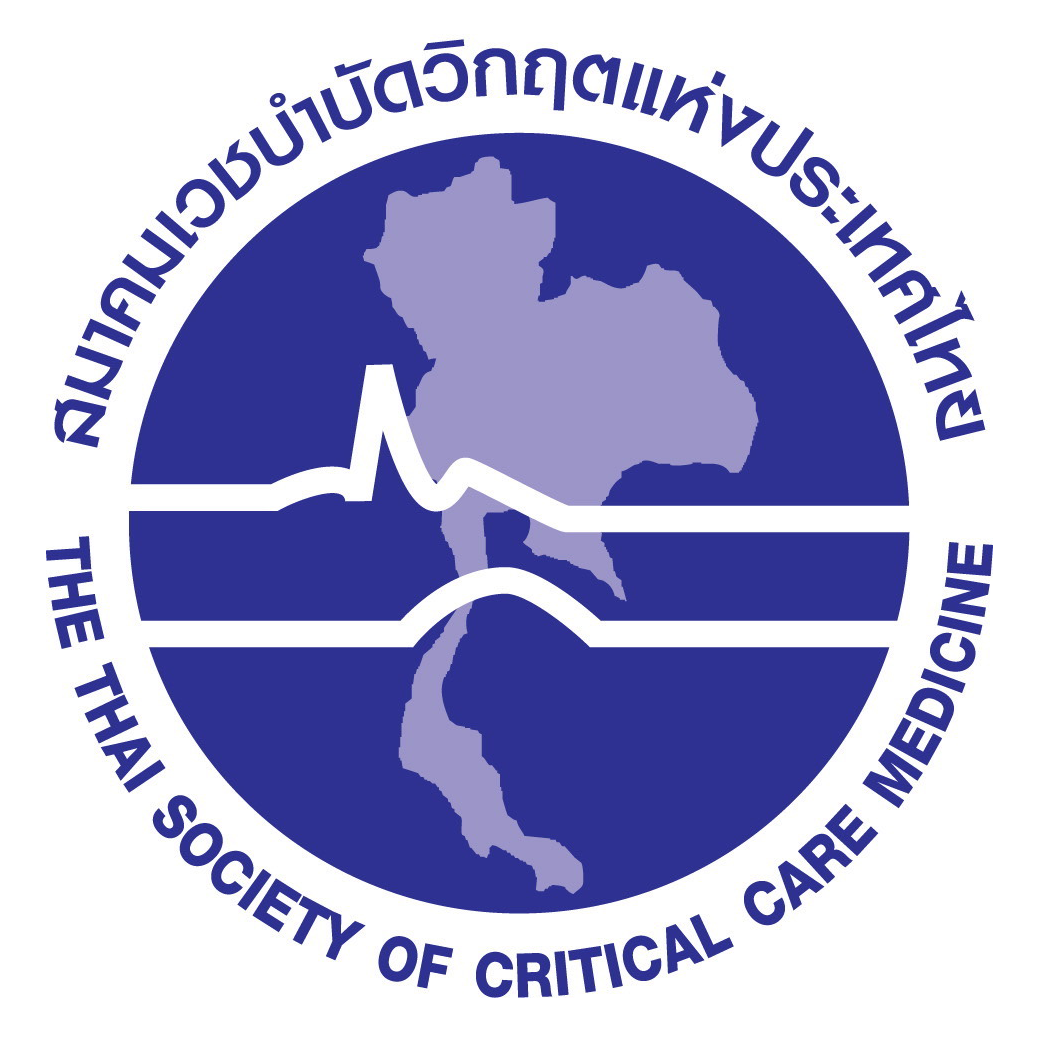
The official emblem of the society is a circular logo featuring the map of Thailand at its center, accompanied by monitoring lines representing electrocardiographic and blood pressure waveforms, symbolizing continuous monitoring and comprehensive care for critically ill patients.
To strengthen professional training in critical care medicine, a joint committee under the Royal College of Physicians of Thailand (RCPT) developed a fellowship training curriculum in critical care medicine, which was approved by the Thai Medical Council (TMC) in 1998. This program is a two-year subspecialty fellowship designed for physicians who have already obtained board certification in internal medicine, anesthesiology, or surgery.
The first cohort of critical care fellows began training in 1999. Since then, the TSCCM has played a significant role in developing critical care specialists in Thailand, with many physicians also receiving advanced training in countries such as the United States, the United Kingdom, and Australia.
In 2013, the TSCCM expanded its training capacity by establishing 15 clinical fellowship programs across 6 accredited training centers throughout the country.
Today, the Thai Society of Critical Care Medicine continues to serve as the national professional organization dedicated to advancing education, research, and standards of care for critically ill patients in Thailand.